Key Facts from This Era
- •A Door with a Published Schedule
- •The Card Tray in the Hall
- •Fire, Tea, and the Empty Months
December is when I am most useful. The coal goes on early and the front rooms take an hour to give in to it, so that by three the parlors hold their heat the way a cup holds tea. Nobody comes to this door in winter by accident.
A Door with a Published Schedule
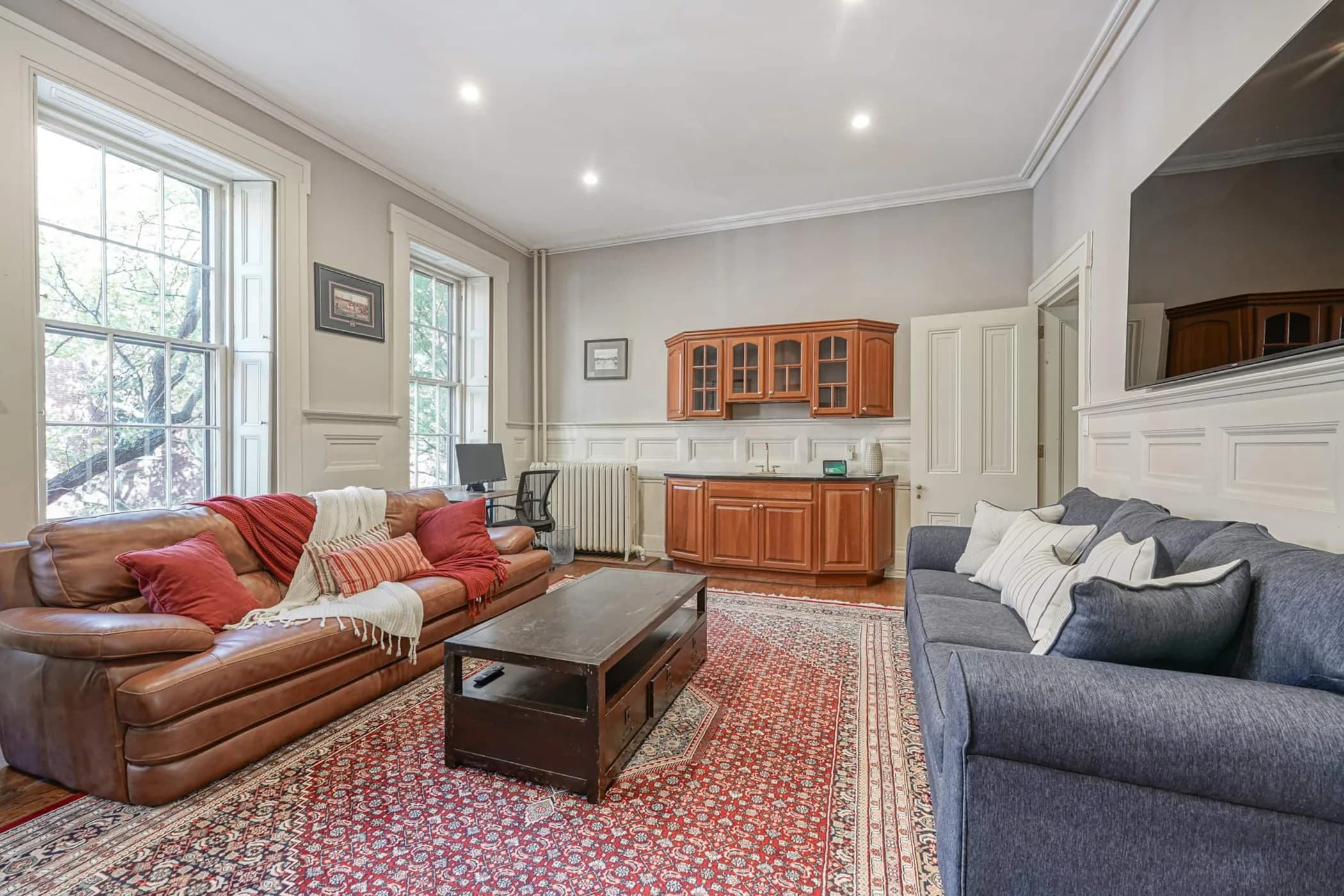
On December 11, 1904, a Philadelphia paper printed eleven words that opened a house: At home—Mrs. Henry C. Davis and the Misses Davis, of 1822 Pine street. That was the whole machine of the season in one line. To be at home was not to be indoors; it was an announcement, set in the paper like a timetable, telling the city which afternoons this particular door on the south side of Pine would stand ready — fire lit, kettle going, the front rooms swept of anything that looked like ordinary life. Two blocks from Rittenhouse Square, a widow and her daughters were letting Philadelphia know when to come.
At home—Mrs. Henry C. Davis and the Misses Davis, of 1822 Pine street.
The woman receiving was Naomi Lawton Davis, born in Delaware in 1842 to English-born parents and widowed since February 1901. Her husband, Henry Corbit Davis, was a grandson of Lucretia Coffin Mott. Whatever else was carried into these parlors on a winter afternoon, that was in the room too — a tea table three generations from a woman who had spent her life refusing to sit quietly at one.
The Card Tray in the Hall
The choreography began before anyone spoke. A caller stepped up from the pavement, the door was answered by someone whose name the newspapers never bothered to print, and a card went down on the tray in the hall — the small stiff rectangle that did the work of a whole conversation. Then the side hall opened into the front parlor, and the pocket doors stood back so the two parlors ran together as one long room, deep enough that the far windows made a second, paler daylight at the end of it. Twenty-two feet of frontage, ninety feet running back toward Waverly Street: a narrow house that spends all its generosity lengthwise.
Cards accumulate. I can hear the tray filling from the step — a small sound, like a spoon set down. The stair takes it up and holds it.
Fire, Tea, and the Empty Months
They received under a ceiling newer than they were. The fifth floor over Pine Street was barely five years old when the Davises published their afternoons beneath it, and the plaster upstairs had not yet had time to crack.
October was the point. The block ran on a calendar: houses shut in June and opened again for the winter, and the at-home notice was how a household took its place in all that. The young women of this house grew up inside the ritual and then outgrew its purpose — within a decade the same daughters were using the same hall table, the same afternoons and the same gloves for work that had nothing to do with cake.
After the last of them, the parlors go quiet in stages. Cups first, then chairs pushed back true, then the fire settling into itself. A house that is only used stays cold in the corners. This one keeps its warmth all the way to the front step, and gives it back to anybody standing there at dusk.