1854
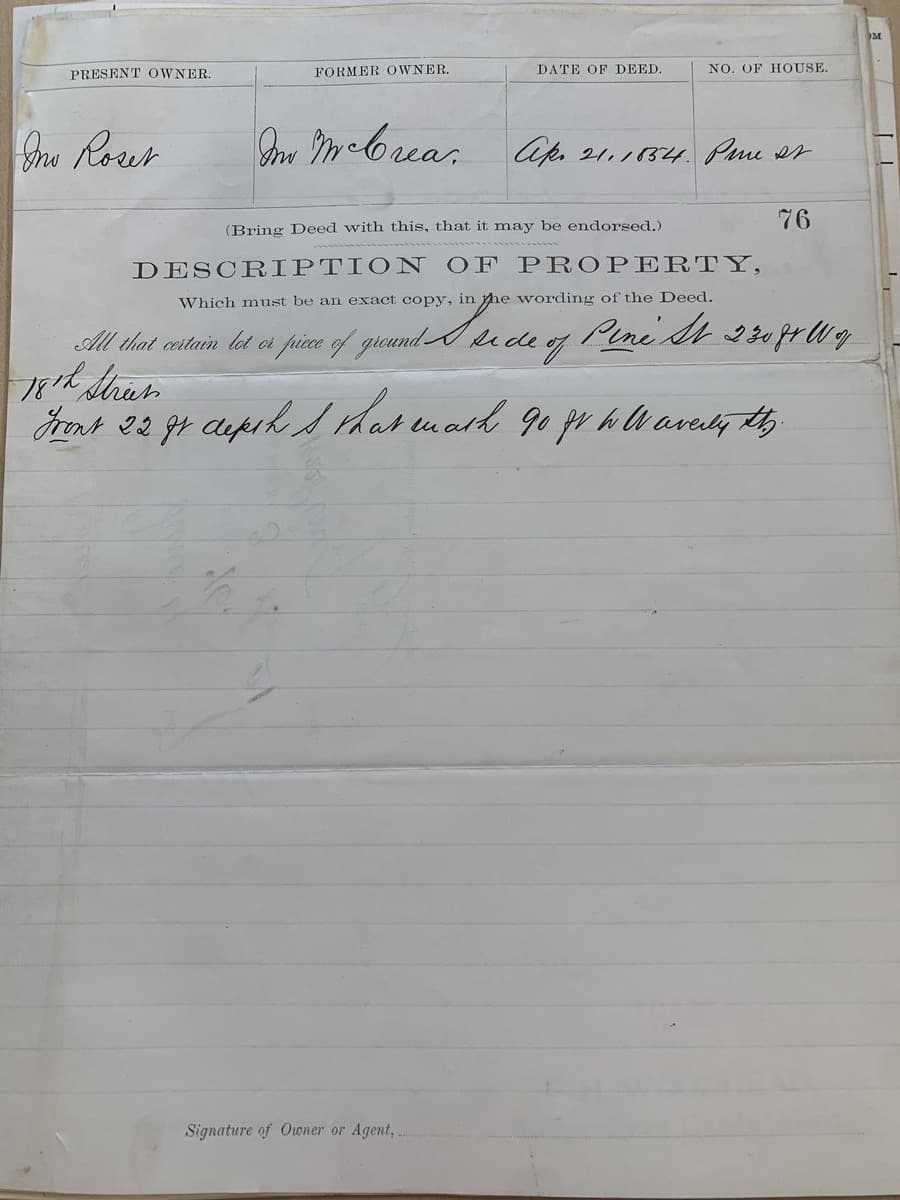
John McCrea sells the property now numbered 1822 Pine to John Roset on April 21; the Rosets are listed at the address by 1855.
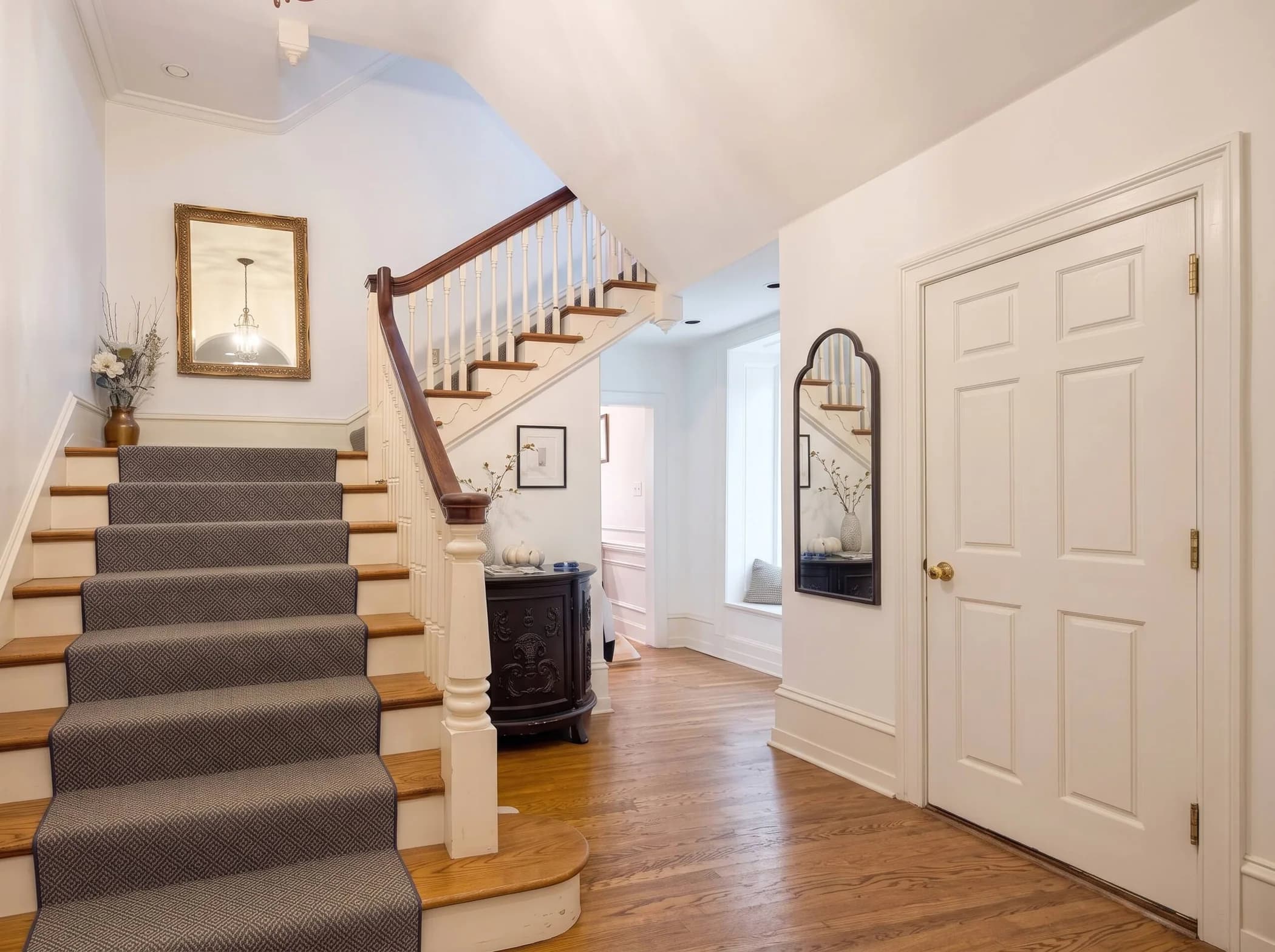
Story documented since 1854 · 1822 Pine Street
The story opens on April 21, 1854, when John McCrea sold this property to the merchant John Roset. The deed describes the ground rather than settling exactly when the masons finished; the Rosets appear at the address by 1855, on a block the city had only just reached. From that first spring, its rooms carry us through a Drexel marriage, the Spencer era, turn-of-the-century alterations, and the Davis women whose parlors became part of Philadelphia's suffrage movement.
A House with a Memory
Caring for this house also means caring for the stories it has held. Deeds, directory entries, and newspaper notices introduce Roset, Spencer, and Davis; a $14,000 sale; an 1899 architectural commission; a 1905 fireplace job; and a 1915 suffrage notice. We have opened the archive so guests and curious neighbors can meet those earlier custodians for themselves.
Archive Line
“The threshold remembers everything and judges nothing.”
From the house history archive
How Old Is It, Really
The house has often been described as “c. 1845,” but Philadelphia’s annual city directories tell a livelier story. Follow the Pine Street numbers from one volume to the next and you can watch the city itself move west — until it reaches this door.
| Directory | Westernmost house on Pine | Houses occupied on this block |
|---|---|---|
| 1849 | no. 399 | none |
| 1850 | no. 514 | none |
| 1851 | no. 486 | none |
| 1852 | no. 534 | none |
| 1853 | no. 708 | none |
| 1854 | no. 793 | 9 |
| 1855 | no. 795 | 19 |
| 1856 | no. 795 | 20 |
Through 1852 the occupied end of Pine Street stops around 15th. Not one house number in the 700s — this block, under the old numbering — appears in any volume before 1853. Then the frontier moves about a block a year: it reaches the 1700 block in 1853 and this one in 1854. John McCrea sold the property to John Roset on April 21 of that year, and Roset is listed at the address in the next volume printed.
As for “c. 1845” — it belongs to the block next door. The 1983 National Register nomination uses that date for 1700–38 Pine, and never for this row. The city’s own property record fills the year-built field with “1800” and flags it as an estimate. A house standing here in 1845 would have sat empty for eight years, four blocks past the last lit window on the street.
Reading Room
Settle in with the narrative, follow the timeline, browse the original documents, or trace the people who cared for the house before us. Each path returns to the same rooms.
10 chapters
A narrative house history drawn from deeds, newspapers, architectural notes, and the rooms themselves.
47 entries
Follow the house from the 1854 McCrea-to-Roset deed through the people and changes that shaped its later life.
53+ documents
Open the original deeds, clippings, notices, and research files that brought the house's story to life.
Chain of title
See how the house passed from one custodian to the next, with each transfer connected to its people and time.
The Drexel Connection
One marriage connects this Pine Street house to a much larger Philadelphia story. The path from the Roset family to Anthony J. Drexel unfolds in four moments:
April 21, 1854. The deed abstract names John McCrea as seller and John Roset, merchant, as buyer; it describes the ground and does not by itself date the finished house.
Ellen Bicking Rozet wed the banker on August 13, 1850. Roset's own obituary, printed in the Evening Telegraph on August 10, 1870, names the sons-in-law: “Mr. Roset's daughters married several of our most prominent citizens, among whom are A. J. Drexel, Dr. J. L. Ludlow, and John A. Brodhead.”
He established the Drexel Institute of Art, Science and Industry in 1891 — the institution that became Drexel University. Ellen died on November 27, 1891, weeks before it opened.
On July 1, 1871, Drexel and J. Pierpont Morgan founded Drexel, Morgan & Co. In 1895, two years after Drexel's death, it was reorganised as J.P. Morgan & Co. — which merged with Chase Manhattan in 2000. JPMorgan Chase names Drexel, Morgan & Co. among its original predecessor firms.
The connection is precise and personal: Ellen Bicking Rozet, daughter of John Roset, married Anthony J. Drexel four years before her father bought the property. It is a family relationship, not an ownership claim — and a remarkable thread in the story of a Philadelphia rowhouse.
Turning Points
1854
John McCrea sells the property now numbered 1822 Pine to John Roset on April 21; the Rosets are listed at the address by 1855.
1893
The property is reported sold for $14,000, then transferred from the Roset estate to the Spencer family.
1899
Agnes M. Spencer commissions Duhring, Okie & Ziegler for alterations and additions.
1915
Miss Martha Davis of 1822 Pine Street sells Equal Franchise Society luncheon tickets.
Documents
Read the deed abstracts, newspaper notices, and supporting files, then come back to the rooms they describe. We keep the archive open because every old notice adds a voice, a detail, or a little more life to the house guests enjoy today.